
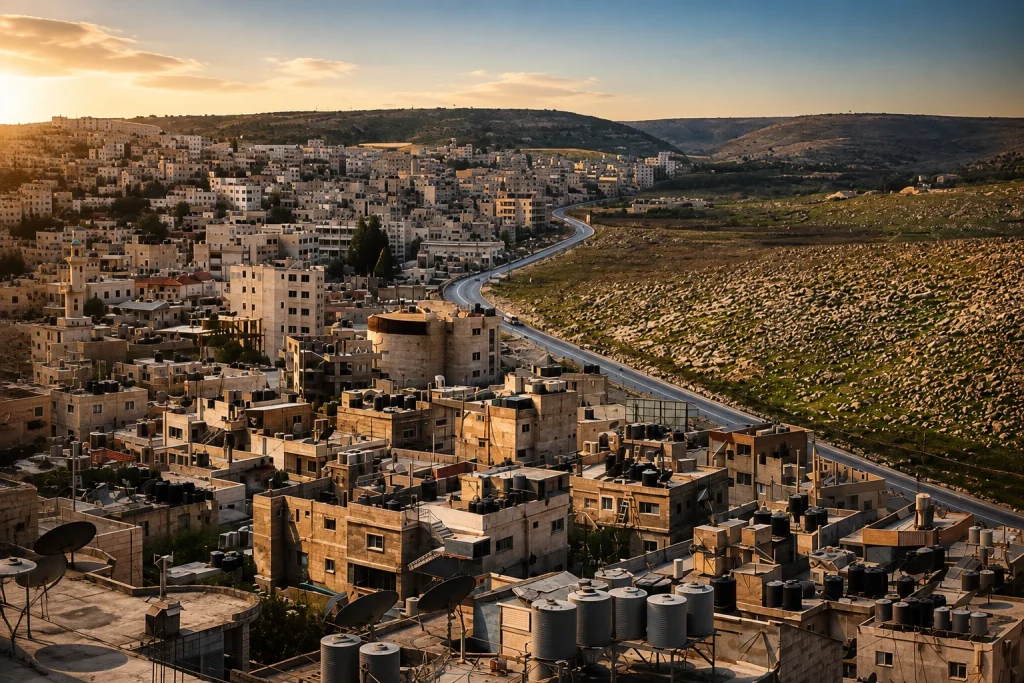
Dheisheh Refugee Camp was established in 1949 as a home for people displaced from more than 45 villages around Jerusalem and Hebron after the Nakba in 1948. The initial population of Dheisheh was approximately 3,000 inhabitants, but over the years it has grown significantly. According to Palestinian statistics, the population reached around 15,000 in 2021, with continued growth expected in 2027 with only few humanitarian and social services for entire population of Dheisheh.
The ongoing political situation and unrest in Palestine heavily impact both the social and economic conditions of Dheisheh residents. Many Palestinians rely on employment inside Israel to improve their economic situation, but due to restrictions, nearly 60% of Dheisheh residents are denied work permits. The lack of local economic opportunities exacerbates poverty, limiting access to basic services. Moreover, the politically sensitive areas in Bethlehem experiences frequent Israeli military incursions, often resulting in arrests. Many of those arrested have direct or indirect effect on children, youth, women. And many of them have connections to our programs. Such activities, programs and events have significant psychological effects on children and families.
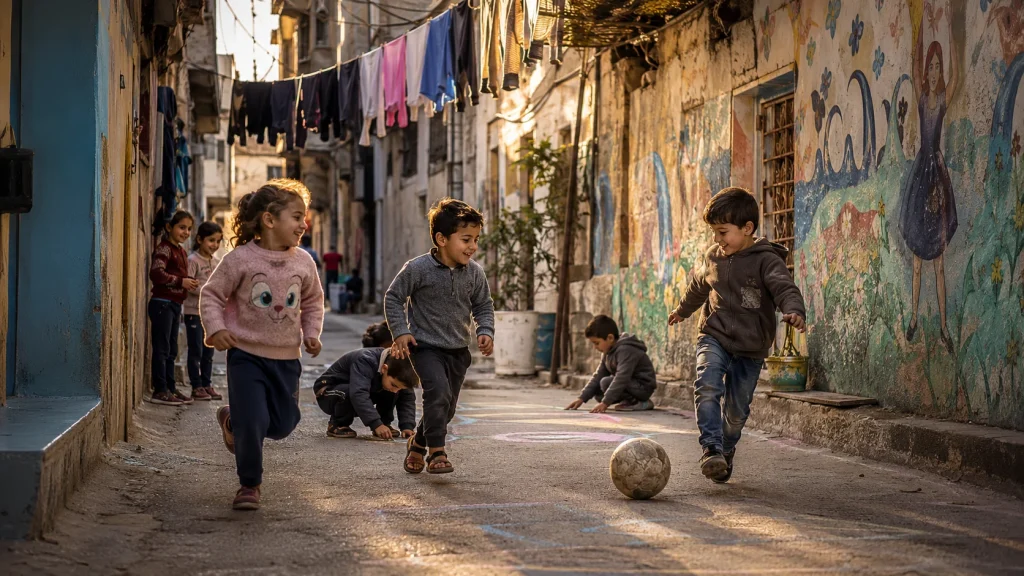
Today, more than half of the camp’s populations are under 18 years. The children have no playground, sports fields, or other open spaces to safely play. Although Dheisheh has a number of local institutions and associations that provide services and psychosocial support including Ibda’a to various segments of the society including children, youth, women, and people with disabilities, there are still many gaps in opportunities.
When Dheisheh Camp was first established, refugee families lived in temporary tents provided by the United Nations as emergency shelters. These tents offered only minimal protection from harsh weather conditions and lacked privacy and basic services.
During the late 1950s, UNRWA gradually replaced the tents with what became locally known as the “UNRWA Rooms.” These were simple housing units, usually consisting of a single room of approximately 10 square meters, constructed with concrete block walls, cement floors, and corrugated metal roofs. They were intended as temporary accommodation until a political solution to the Palestinian refugee issue could be reached.
Over time, as families grew and the temporary situation became permanent, these one-room shelters no longer met residents’ needs. Families gradually expanded their homes at their own expense by adding additional rooms and eventually building extra floors above the original structures. Today, most of the original UNRWA rooms have evolved into multi-storey concrete buildings, with only small portions of the original structures still visible inside some homes.
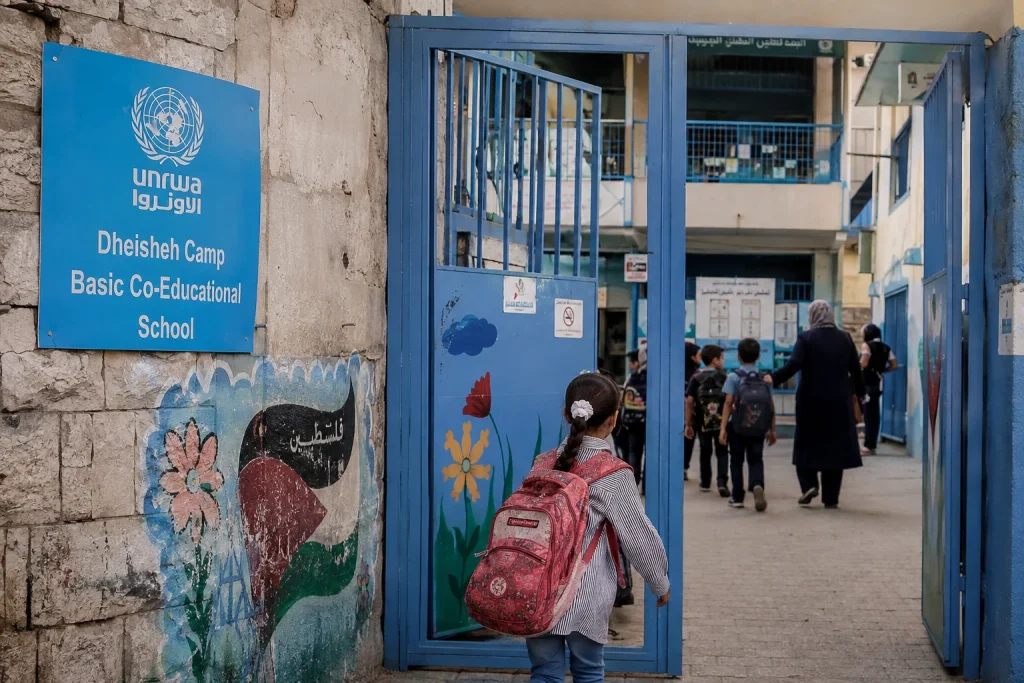
Education has always been regarded as one of the most important priorities for the residents of Dheisheh Refugee Camp. It is considered not only a pathway to improving socio-economic conditions but also a means of preserving Palestinian identity, culture, and hope for future generations. UNRWA currently operates four schools serving approximately 1,740 students, in addition to several kindergartens and nearby government and private schools. The camp also benefits from its proximity to higher education institutions, including Bethlehem University and Al-Quds Open University.
Despite relatively high school enrolment rates, the education sector faces numerous challenges. Classrooms are often overcrowded, educational facilities are limited, and many children experience psychological stress due to repeated military incursions and ongoing economic hardship. Financial constraints also prevent many students from completing higher education. Community-based organizations play a vital role in supporting education through after-school tutoring, cultural programmers, libraries, psychosocial support services, scholarships, and youth development initiatives. These efforts contribute to reducing school dropout rates and improving educational outcomes.
Children represent one of the largest and most vulnerable population groups in Dheisheh Refugee Camp. According to UNRWA’s 2023 Camp Profile, there are 6,114 children under the age of 18, including 3,122 boys and 2,992 girls, representing approximately 32% of the camp’s registered population of 19,240 refugees.
Despite their large proportion within the community, children grow up in an environment characterized by severe overcrowding and limited opportunities for healthy physical, social, and emotional development. The camp covers only 0.33 square kilometers, making it one of the most densely populated refugee camps in the West Bank. As a result, children have almost no access to safe public parks, playgrounds, green spaces, or recreational facilities where they can play, learn, and interact freely. The ongoing political situation and war, many children experience stress, anxiety, fear, and interrupted childhood experiences. In addition, overcrowded schools, limited extracurricular opportunities, and a shortage of child-friendly public spaces reduce opportunities for creativity, social participation, and positive personal development. These realities highlight the urgent need for comprehensive child interventions that combine education, psychosocial support, arts and culture, sports, life skills, digital learning, environmental education, and child participation.
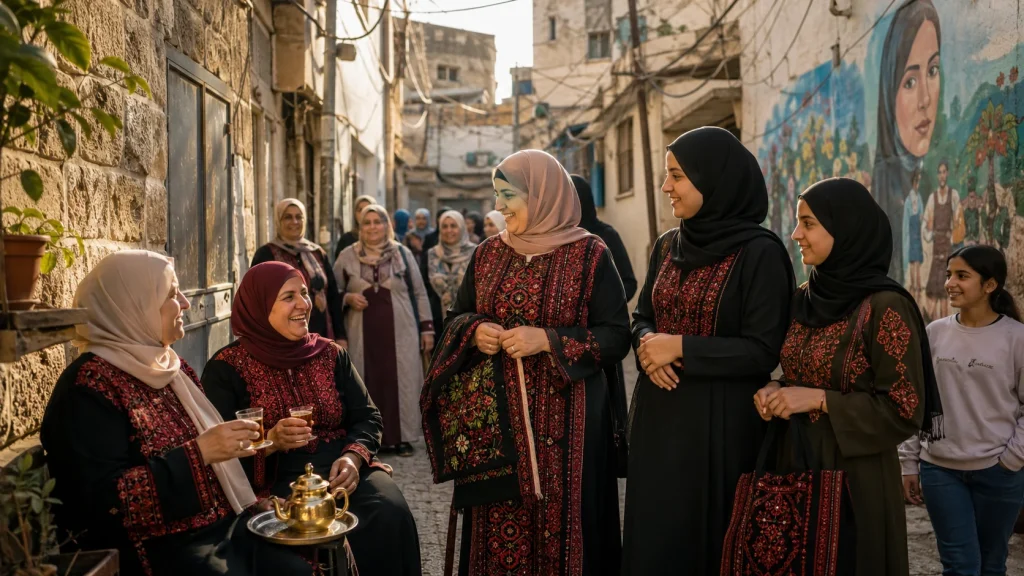
Women and girls constitute nearly half of Dheisheh Refugee Camp’s population. Based on UNRWA demographic data, approximately 9,500–9,600 females live in the camp, including 2,992 girls under the age of 18 and approximately 6,500 adult women aged 18 years and above. They represent almost 50% of the camp’s registered population.
Despite their central role in supporting families and sustaining community life, women and girls continue to face numerous social and economic challenges. High unemployment, limited access to stable employment opportunities, declining household incomes, and increasing living costs have placed significant pressure on women, particularly mothers who are responsible for childcare and household management. These challenges demonstrate the importance of expanding programmers that promote women’s economic empowerment, vocational training, entrepreneurship, psychosocial support, leadership development, legal awareness, and participation in community decision-making. Strengthening the capacities of women and girls not only improves their own well-being and economic independence but also contributes directly to enhancing household resilience, reducing poverty, and fostering sustainable community development within Dheisheh Refugee Camp.
Culture and arts represent an essential part of the identity of Dheisheh Refugee Camp. They have played a significant role in preserving collective memory, strengthening Palestinian identity, and enhancing community resilience. Since the establishment of the camp, residents have maintained their cultural heritage through the transmission of traditions, folk songs, traditional dance (Dabkeh), embroidery, and stories connected to their original villages from which they were displaced in 1948. Over time, arts and cultural activities have become important spaces for creativity and expression, particularly for children and young people, especially in light of the difficult social and economic conditions and the lack of safe public spaces within the camp. Cultural activities, including theatre, music, visual arts, and traditional performances, have contributed to building self-confidence, developing skills, and providing positive environments for learning, communication, and expressing the experiences and challenges faced by the community.
